Corporate, Franchise, or Independent Luxury Brokerage?
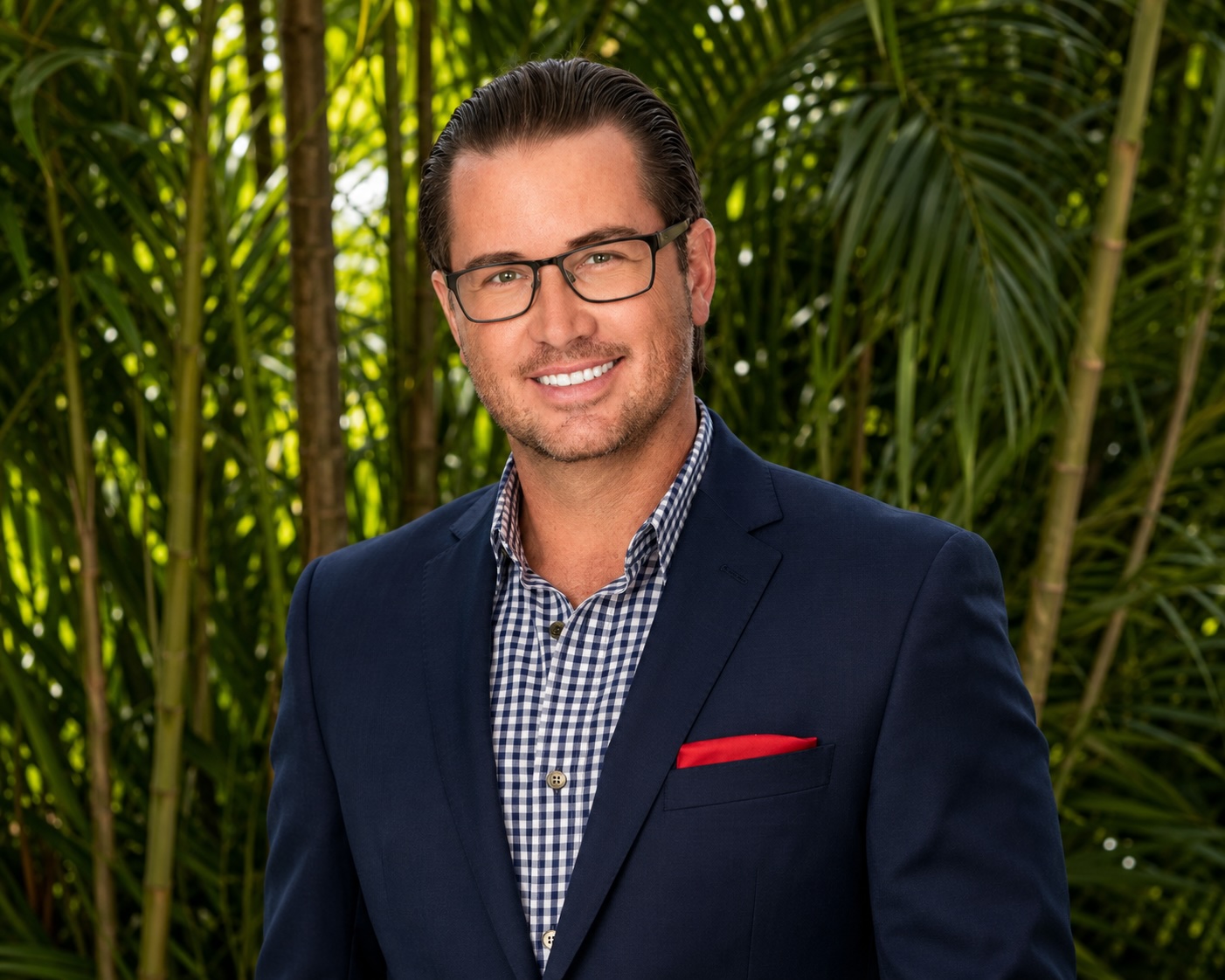
By Eric Gunther
Realtor & Managing Broker of Greenfield Waters Florida Realty
Choosing a real estate brokerage is one of the most important business decisions a sales associate will make.
Unfortunately, many agents make that decision based primarily on a familiar logo, an impressive office, a promised commission split, or the number of people already affiliated with the company. Those considerations may matter, but they do not answer the most important question:
Will this brokerage actually help the agent build a productive, profitable, and sustainable real estate business?
A brokerage is not merely a place to hold a real estate license. It is the business platform from which an agent will prospect, advertise, develop expertise, advise clients, negotiate transactions, and build a professional reputation.
The best real estate brokerage will therefore be different for different people. A new licensee learning the fundamentals may need one type of environment. A high volume producer may need another. A talented sales associate who understands real estate but has not yet built a consistent business may need something entirely different.
Before choosing, an agent should understand the three major brokerage models: corporate brokerages, franchise companies, and independent brokerages.
Understanding the Corporate Real Estate Landscape
The name displayed on a real estate sign does not always reveal the company sitting behind it.
A large corporate holding company may own numerous brokerage brands, franchise systems, mortgage businesses, title operations, relocation companies, and real estate technology platforms. Some offices may be directly owned by the parent organization, while others are independently owned franchises operating under a licensed brand name.
As of July 2026, Compass International Holdings operates a portfolio that includes Compass, @properties, Christie’s International Real Estate, Coldwell Banker, Century 21, Corcoran, ERA, Better Homes and Gardens Real Estate, and Sotheby’s International Realty. These brands retain separate identities, but they now belong to the same broad corporate organization following the completed Compass and Anywhere Real Estate combination.
HomeServices of America is a Berkshire Hathaway affiliate with a large collection of locally operated brokerage companies, as well as the Berkshire Hathaway HomeServices franchise network. Its broader ecosystem also connects brokerage, mortgage, title, insurance, escrow, and relocation services.
AGNT, formerly eXp World Holdings, operates a different model. Its brands include eXp Realty, eXp Commercial, NextHome, FrameVR.io, and SUCCESS Enterprises. Its core brokerage model is primarily cloud based rather than centered on traditional local offices.
Keller Williams remains primarily a franchise organization built around independently operated market centers. Those market centers retain meaningful local autonomy, which means the quality, leadership, culture, expenses, and support can vary considerably from one office to another.
RE/MAX is also primarily a franchise organization. In April 2026, The Real Brokerage announced an agreement to acquire RE/MAX Holdings and form Real REMAX Group. As of July 2026, that transaction remains expected to close during the second half of the year, subject to the required approvals and closing conditions.
Douglas Elliman presents another variation: a publicly traded corporate company focused heavily on one consumer brand with a substantial presence in luxury markets.
The purpose of understanding these corporate family trees is not to suggest that one structure is automatically good or bad. It is to help agents recognize what they are actually joining.
Two agents working beneath the same national logo can have dramatically different experiences because their offices may have different owners, managing brokers, commission structures, fees, expectations, training programs, and cultures.
What Large Corporate and Franchise Brokerages Can Offer
Large brokerage organizations can provide genuine advantages.
They may offer national brand recognition, established technology, relocation relationships, standardized forms, compliance departments, marketing systems, training libraries, referral networks, and large communities of affiliated agents.
For some sales associates, these resources provide exactly the structure they want.
A recognizable brand can also create initial credibility. Sellers and buyers may already know the company name before meeting the individual agent. That recognition can help open a door.
However, a famous brand does not walk through that door, conduct the listing presentation, evaluate the property, develop the marketing strategy, negotiate the transaction, or maintain the client relationship.
The individual agent must still perform.
This is especially important in Palm Beach County, where numerous national, regional, corporate, franchise, and independent luxury brokerages compete for the same sophisticated clients.
Nearly every established company can produce polished marketing materials. Many agents have access to elegant brochures, property websites, professional photography, global syndication, and similar corporate talking points.
The difficult question remains:
Why should the client hire this particular agent?
The Possible Limitation of a Very Large Office
An office containing 100 or 200 sales associates may provide visibility, energy, networking, and a recognizable identity. It may also create intense internal competition.
Many agents may be using the same logo, marketing templates, listing presentation, company history, luxury vocabulary, and corporate story. Yet only a comparatively small group may be responsible for much of the office’s consistent transaction volume.
That does not necessarily mean the company has failed. Large brokerages often build systems intended to serve large populations of agents.
The practical concern is capacity.
How much time can the managing broker devote to one sales associate’s individual business? Can leadership help that agent select a geographic specialty, analyze property turnover, build an accurate mailing list, evaluate expired listings, establish an advertising budget, measure results, and adjust the plan?
Can the broker help underwrite an unusual transaction, think through a negotiation, or explain the financial motivations beneath a buyer’s or seller’s position?
Or is the managing broker primarily occupied with compliance, recruiting, office administration, personnel issues, and hundreds of other agents?
A sales associate can be surrounded by people and still be building a business alone.
“An agent can sit in an office with 200 other Realtors and still feel entirely alone,” said Eric Gunther, REALTOR ® and Managing Broker of Greenfield Waters Florida Realty. “The important question is not how many agents belong to the company. It is whether someone with meaningful experience has the time, knowledge, and willingness to help that individual agent grow.”
Why an Independent Luxury Brokerage Can Be Different
An independent brokerage can often make decisions closer to the client, the market, and the individual sales associate.
There may be fewer management layers, fewer standardized corporate restrictions, and more direct access to ownership. Compensation, advertising, mentorship, team structures, specialties, and growth plans can be discussed with the people who are actually authorized to make decisions.
Independence alone does not guarantee quality. A small brokerage without experienced leadership, systems, capital, or a coherent strategy may offer less than a major company.
The advantage appears when independence is combined with knowledgeable ownership, selective recruiting, direct coaching, strong market positioning, and the flexibility to construct opportunities around talented people.
That is the model Greenfield Waters Florida Realty seeks to provide.
The firm is deliberately selective. Its objective is not to accumulate the largest possible number of licensees. It is to identify capable people who understand that real estate must be approached as a business.
Building a Business Rather Than Holding a Real Estate Job
Eric Gunther developed the Greenfield Waters philosophy through both real estate and an earlier career in finance, including investment banking, asset based lending, factoring, private credit, and financial business development.
That background produces a different view of advertising.
Many agents treat advertising as an expense to be minimized. Greenfield Waters views precise advertising as invested capital that should be directed toward a defined market, measured, repeated, and evaluated according to its potential return.
“When real estate advertising is precise, targeted, and measured, the potential return on investment can be incredible,” Gunther said. “The purpose of a generous commission structure is not simply to allow an agent to take more money home. It is also to give the agent the financial ability to reinvest in a real business.”
That creates a different mentality.
A person treating real estate as a social job or occasional side hustle may wait for the company, a friend, an internet lead service, or a chance encounter to provide the next customer.
A business owner identifies a market, studies the opportunity, establishes a budget, reaches a defined audience consistently, records the response, and improves the model over time.
“A business model should be measurable,” Gunther said. “An agent should understand what is being spent, who is being reached, how frequently they are being reached, what conversations are being created, and what those relationships may ultimately be worth.”
This does not mean every advertising campaign produces an immediate closing. Real estate relationships often take time. It does mean that the agent should know why the campaign exists and what result is being pursued.
Activity without a model can become an exhausting collection of posts, meetings, open houses, and conversations that never develop into dependable production.
The Importance of Basic Deal Underwriting
Greenfield Waters is highly selective based on talent, judgment, ambition, and commercial awareness.
The strongest fit is often a former business owner, entrepreneur, finance professional, or person with experience in financial business development. These individuals frequently understand prospecting, relationship management, capital allocation, negotiation, pipelines, and accountability.
However, basic deal underwriting is essential.
A serious real estate professional should be able to examine a property beyond its photographs and asking price. That includes understanding comparable sales, carrying costs, financing, rental economics, renovation exposure, market liquidity, likely resale value, and the motivations influencing both sides of a transaction.
“Luxury real estate is not simply about presenting an expensive property beautifully,” Gunther said. “A capable agent should be able to discuss the property as an asset, understand the economics of the transaction, and help the client recognize both opportunity and risk.”
An applicant does not necessarily need to arrive as a top producer.
Greenfield Waters may be particularly compelling for the licensed sales associate who already knows the fundamentals, understands how to behave professionally, and recognizes opportunity, but needs serious support to turn ability into consistent production.
That person may not need another generic introductory course. The agent may need direct coaching, honest accountability, market selection, advertising guidance, deal analysis, and mentorship from someone who has built businesses.
Growth Can Include Building a Team
Not every talented agent wants to remain a solo producer.
For some sales associates, growth eventually means hiring support, recruiting other agents, developing a specialty group, or building a team capable of producing business beyond the efforts of one individual.
Large organizations often have predetermined team policies, commission schedules, administrative charges, and approval procedures. Those systems can provide consistency, but they can also limit the ability to negotiate around an unusual opportunity.
Because Greenfield Waters is independently owned, ownership can speak directly with a proven agent or team leader and evaluate the actual economics of the relationship.
“When an agent has demonstrated the ability to produce, lead people, and build something valuable, the conversation should not be confined to a standard commission chart,” Gunther said. “We have the flexibility to understand the opportunity and negotiate a highly competitive arrangement that makes sense for both the agent and the company.”
Compensation can therefore reflect more than individual transactions. Production, leadership, recruiting ability, team development, business generation, and the long term value being created can all become part of the discussion.
A Career Without a Predetermined Glass Ceiling
For the most seasoned and trusted Greenfield Waters sales associates, the potential opportunity may eventually extend beyond personal production and team leadership.
Subject to ownership approval, applicable licensing requirements, a separate written agreement, and a demonstrated history of production, judgment, leadership, and loyalty to the company’s standards, an approved professional could potentially establish a licensed Greenfield Waters operation under the company’s brand and history.
This is not an automatic benefit based on tenure. It is not a public franchise offer, and it is not guaranteed to every sales associate.
It is a selective potential opportunity for an individual who has earned substantial trust and demonstrated the ability to produce, lead, underwrite transactions, develop people, and protect the reputation of the Greenfield Waters name.
“The greatest opportunity we can offer the right person may eventually be larger than a commission split,” Gunther said. “For someone who has proven what they can produce and what they are capable of building, the future may include operating their own Greenfield Waters shop.”
This creates a possible path from individual production to specialization, team leadership, negotiated business arrangements, and, when appropriate and approved, licensed shop ownership.
The path is not automatic, but the ceiling is not predetermined.
Questions Every Sales Associate Should Ask
Before joining any real estate brokerage, an agent should ask:
1. Who actually owns and controls the brokerage?
2. Is the office company owned, franchised, virtual, or independently operated?
3. How accessible is the managing broker?
4. Who will help me create a specific plan for generating business?
5. How many agents am I competing with inside the same office?
6. What are all commission deductions, fees, and required expenses?
7. Does the brokerage teach measurable business development?
8. Can leadership help me analyze and underwrite transactions?
9. Is there a realistic path to team building and greater responsibility?
10. What can I become here if I succeed?
The last question may be the most important.
What Is the Best Real Estate Brokerage?
The best real estate brokerage depends on the agent.
A sales associate seeking a famous logo, a large community, standardized systems, or a virtual platform may be well served by a corporate or franchise company.
However, the answer may be different for an ambitious professional who understands basic deal underwriting, recognizes that real estate is a business rather than a social job or side hustle, wants direct coaching and mentorship, and intends to build something larger than a collection of individual transactions.
That agent needs more than a place to hold a license.
The agent needs leadership with the capacity to help, a compensation structure that supports reinvestment, an intelligent advertising philosophy, direct access to decision makers, and a growth path without an artificial ceiling.
“The right brokerage should not simply ask how many transactions an agent can produce for the company,” Gunther said. “It should also ask what that agent is capable of becoming and whether the company has the knowledge, economics, and flexibility to help them get there.”
For the right sales associate REALTOR ®, Greenfield Waters Florida Realty and Eric Gunther offer one of the most compelling brokerage opportunities in Palm Beach County, Florida.
The firm is not designed for everyone.
It is designed for talented professionals who can understand the numbers, recognize opportunity, accept serious coaching, invest intelligently, and build a measurable real estate business.
The best brokerage is not necessarily the company with the most agents, the largest building, or the most recognizable logo.
It is the brokerage that offers the right person the clearest path to becoming more capable, more productive, more profitable, and ultimately more independent.
About Eric Gunther and Greenfield Waters Florida Realty
Eric Gunther is a REALTOR ®, entrepreneur, finance professional, and the Managing Broker of Greenfield Waters Florida Realty, an independent luxury real estate brokerage serving Palm Beach County, Florida.
Greenfield Waters works selectively with talented sales associates who demonstrate strong judgment, commercial awareness, basic deal underwriting ability, and a serious desire to build a measurable real estate business through coaching, mentorship, precise advertising, and long term professional growth.
Glad to help and advise, as always,
Eric Gunther
REALTOR ® and Managing Broker
Greenfield Waters
eric.gunther@greenfieldwaters.com
Call or Text 561-400-8474